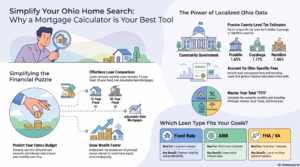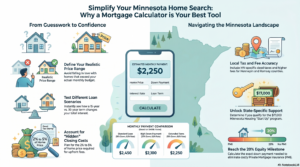

Buying a home is a big deal. It’s a journey that needs careful planning and good data. Mortgage calculators are key tools in this search.
These tools help you figure out how much you can afford. They look at your money situation and tell you what you can buy. This way, you know what you can afford before you talk to lenders.
Experts say to follow the 28/36 rule. It means your home costs shouldn’t be more than 28% of your income. Doing an affordability analysis early helps you know what you can really afford.
Using mortgage calculators helps you make smart choices. Being ready makes buying a home less scary and more successful.
Key Takeaways
- Understand your total budget using standard financial benchmarks.
- Apply the 28/36 rule to maintain long-term financial health.
- Use digital tools to simulate various interest rate scenarios.
- Identify your maximum comfortable monthly payment early.
- Gain confidence by grounding your search in accurate data.
Understanding Mortgage Calculators
Starting your journey to owning a home means knowing your money limits. Before you sign a big loan, it’s key to understand how different things affect your monthly costs. Using mortgage calculators is the best way to get clear early on.
What is a Mortgage Calculator?
A mortgage calculator is a tool online that shows your monthly home payments. It uses your income, debt, and down payment to give you a real cost picture. By putting in these numbers, you get actionable insights to help you decide.
These tools work by using formulas based on your situation. They consider principal, interest, taxes, and insurance. This gives you a full view of what you might owe, so you’re not surprised later.
Why Use a Mortgage Calculator?
Using these online tools is a big plus when planning your money future. They let you try out different scenarios, like a bigger down payment or a shorter loan. This proactive approach helps you know what you can really afford.
These calculators are key to feeling sure about buying a home. They help you see your financial path. This way, you can talk to lenders knowing your budget. This is crucial for keeping your finances stable and reaching your dream of owning a home.
Key Functionalities of a Mortgage Calculator
Using the best features of a digital tool lets you control your affordability analysis. Modern mortgage calculators make complex financial data easy to understand. They help you plan your home buying journey.
Loan Amount Input
The loan amount you borrow is the starting point. Changing this figure shows how different down payments affect your debt.
Putting in an accurate loan amount helps you see if a property fits your budget. This is key for your long-term financial plans.
Interest Rate Options
Interest rates change with the market and your credit score. Good mortgage calculators let you try different rates.
Trying out different interest rates prepares you for market changes. This helps you get accurate results for your future payments.
Term Length Selection
Choosing between a 15-year or 30-year mortgage affects your monthly payments and total interest. Trying out these options helps you find the right balance.
| Variable | Adjustment Impact | Primary Goal |
|---|---|---|
| Loan Amount | High impact on principal | Budget alignment |
| Interest Rate | Medium impact on interest | Market sensitivity |
| Term Length | High impact on total cost | Payment flexibility |
User-Friendly Interface
You deserve a digital experience that makes complex calculations easy. When looking at the best features of a financial tool, the layout and how it works are key. A clean, organized dashboard lets you focus on your financial future, not on confusing software.
Intuitive Design
An intuitive design is crucial for a top-notch mortgage calculator. It should let you easily enter your financial info, like home price and down payment. With a logical interface, you can quickly change variables to see how interest rates affect your monthly payments.
By keeping things simple, developers help you stay in charge of your planning. This user-friendly interface makes your mortgage journey clear. Simple inputs lead to accurate and stress-free financial planning.
Mobile Compatibility
Modern home buying often happens on the go. Whether you’re at an open house or meeting with a real estate agent, mobile compatibility is key. You should be able to quickly access your numbers on a smartphone or tablet to make smart decisions.
The following table shows why these design elements are important for your success:
| Feature Category | Standard Experience | Premium Experience |
|---|---|---|
| Data Entry | Manual and slow | Fast and intuitive |
| Device Support | Desktop only | Fully responsive mobile |
| Visual Clarity | Cluttered layout | Clean, focused design |
| Navigation | Complex menus | One-click access |
The best features are those that fit your lifestyle. By picking a tool with a user-friendly interface, you’ll feel confident in the housing market.
Comprehensive Calculation Features
Modern mortgage calculators make complex numbers easy to understand. They show you what you’ll owe before you sign anything. This helps you see your financial commitment clearly.
Monthly Payment Breakdown
A good calculator shows more than just a total. It breaks down your monthly payment into parts. You’ll see the principal, interest, and other costs like taxes and insurance.

Seeing these parts helps you understand your payment better. You can see how much goes to paying off the loan and how much to costs. You can also change your down payment to see how it affects your payments.
Amortization Schedule
An amortization schedule shows your loan’s journey. It tells you how much of each payment goes to interest and principal.
In the beginning, most of your payment goes to interest. But over time, more goes to paying off the loan. This is a key part of planning for the future.
Looking at this schedule helps you see when your equity starts growing faster. It helps you decide if paying extra on your loan is right for you. These interactive graphs make it clear what borrowing costs over time.
Customization Options
Getting a mortgage estimate is more than just numbers. With customizable options, you can make a plan that fits your money situation.
Adjustable Variables
A good tool lets you change more than just the loan amount and interest rate. You can adjust property taxes, homeowners insurance, and HOA fees to see a more accurate number.
These changes make your monthly payment estimate more real. This way, you can plan your budget better for owning a home.
Saving Scenarios
Today’s calculators have interactive graphs to show how choices affect your debt. By saving different scenarios, you can see how they compare.
For instance, you can see how a bigger down payment lowers your monthly payment. Or how a shorter loan saves on interest. This helps you make informed decisions for your future.
| Strategy | Down Payment | Loan Term | Monthly Impact |
|---|---|---|---|
| Standard Plan | 10% | 30 Years | Baseline |
| Aggressive Equity | 20% | 30 Years | Lower Payment |
| Fast Payoff | 10% | 15 Years | Higher Payment |
| Balanced Approach | 20% | 15 Years | Optimal Savings |
Comparison Tools
Using loan comparison tools makes finding the right home financing easy. These tools help you look at different loans side by side. This way, you can pick the one that fits your future plans best.
Rate Comparison
Comparing fixed-rate and adjustable-rate mortgages is key. You can change the interest rates to see how it changes your monthly payments. Knowing these changes helps you choose the right option for you.
Loan Type Comparisons
Today’s calculators offer customizable options. You can try different down payments and loan lengths. This lets you see how different loans affect your costs.
Many sites now have interactive graphs to help you understand your finances better. These graphs show how different loans compare. They help you find the best deal for your home.
Additional Resources
You can make your research better by using tools that mix learning with finance. The best online tools are more than just math. They help you plan your property investment well.
Access to Mortgage Trends
Knowing the market changes is key to buying at the right time. Many sites give real-time updates on rates and homes for sale. This helps you compare loans better and see how market changes affect your buying power.
Getting real-time updates lets you adjust your plans based on the economy. This way, you can avoid surprises when you buy. Being ahead of others can give you a big edge.
Links to Financial Articles
Learning more about buying a home is important for your money’s health. Good sites have articles on fixing your credit and understanding closing costs. You might also find tools like a home equity loan calculator for future projects.
These articles help you turn data into plans. By using these online tools, you can make your budget better and learn more about money. Doing your homework will make owning a home more stable and rewarding.
| Resource Type | Primary Benefit | Frequency of Use |
|---|---|---|
| Market Trends | Strategic Timing | Weekly |
| Financial Articles | Educational Depth | As Needed |
| Loan Calculators | Budget Precision | Daily |
Local and State Specific Features
Your monthly housing budget depends on where you live. Base mortgage rates are key, but you must also consider your city or state’s financial scene.
Using a tool with customizable options helps. It lets you input data that shows your real cost of living. This way, you get a clear view of your monthly housing costs.

Regional Loan Limits
Loan limits vary across the U.S. Government agencies like FHA or Fannie Mae set these limits. They show the max you can borrow for a property in a county.
In expensive areas, you might need a jumbo loan. A good calculator checks if your home fits within these limits.
Tax Considerations
Property taxes and insurance costs change by area. These costs are often added to your mortgage payment through escrow.
Not counting these costs can make your budget too low. Always check the local tax rate and insurance costs for your area. This keeps your affordability analysis accurate.
| Cost Factor | Impact on Budget | Regional Variability |
|---|---|---|
| Property Taxes | High | Significant |
| Homeowners Insurance | Medium | Moderate |
| Loan Limits | High | High |
| Local Assessments | Low | Moderate |
Security and Privacy Measures
When you use a mortgage calculator, you want to know your info is safe. Protecting your personal information is key when buying a home. Choose sites that keep your data private so you can trust the accurate results you get.
Data Protection Practices
Good financial tools have strong data protection. They promise not to share your info with others. Look for a privacy policy that explains how your data is used.
Many calculators work right in your browser. This means your info stays on your device. It’s safer this way, and you’re in control of your financial plans.
Secure Connections
A secure connection is vital for safe online use. Make sure the site uses HTTPS encryption. This keeps your data safe as you get real-time updates.
Check for a padlock icon in your browser. It shows the site is secure. Using these sites lets you plan without worry, knowing your data is safe.
| Security Feature | Why It Matters | User Benefit |
|---|---|---|
| SSL/TLS Encryption | Protects data in transit | Prevents interception |
| Local Processing | Data stays on device | Maximum privacy |
| Privacy Policy | Defines data usage | Transparency |
| No Account Required | Reduces data footprint | Anonymity |
Customer Support and Guidance
Getting a mortgage is more than just math. It needs expert help. A user-friendly interface makes it easy to enter your financial info. But, it’s just the start.
Professional lenders help turn numbers into a real plan for your future.
Available Help Resources
Top platforms have educational content in their calculators. Look for tools with comprehensive FAQs, glossaries, and guides. These help you understand how your choices affect your money.
These resources let you understand your results better. This way, you can make choices with more confidence. It shows a tool is well-made for your needs.
Contact Options
For deeper questions, talking to a Home Lending Advisor is key. The best calculators have live chat or a form for a meeting. This is great for comparing loans between different mortgages.
Talking to an expert makes moving from math to a preapproval easier. Here’s why using both digital tools and human advice is best for finding a home.
| Feature | Digital Calculator | Professional Advisor |
|---|---|---|
| Speed of Results | Instant | Requires Meeting |
| Personalized Advice | Limited | Highly Tailored |
| Market Context | General | Specific & Current |
| Goal Setting | Mathematical | Strategic Planning |
User Reviews and Testimonials
Before you choose a mortgage calculator, check what others say. Their feedback is like social proof. It helps you know if a tool is good or not.
Importance of Feedback
A good tool should be easy to use. Many users say if a calculator is simple or hard to use. Reliability is key when planning your money future.
Also, tools that update fast get praised. If a calculator doesn’t update right, users will say so. This helps you avoid bad choices.
Where to Find Reviews
Look for feedback on Trustpilot and Google Reviews. These sites tell you about a service’s reputation. They talk about how easy or hard a calculator is to use.
Also, check financial forums or community boards. Experienced buyers share their honest opinions there. This helps you pick a tool that helps your money goals.
Conclusion: Choosing the Right Mortgage Calculator for Your Needs
Choosing the right mortgage calculator is key to owning a home. It helps you plan your finances well. This way, you can reach your goals.
Online tools give you important estimates. They help you start your research. But, don’t forget to get advice from experts like Quicken Loans or Bank of America.
Use what you learn from these tools wisely. They help you feel sure about buying a home. Start planning your financial future now.