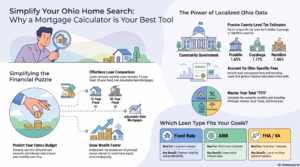

Buying a home is a big deal. It’s a huge step in your life. Digital financial tools make it easier to understand.
These tools help prospective homeowners see what they’re getting into. You can try out different options before you decide. This way, you can plan better and feel more secure about your future.
Key Takeaways
- Digital tools provide instant clarity on complex loan structures.
- Testing variables early prevents future financial strain.
- Strategic planning reduces the time spent on manual calculations.
- Informed buyers negotiate with greater confidence and authority.
- Early preparation secures long-term fiscal health for your household.
Understanding Mortgage Calculators
Getting financial clarity is easy with a mortgage calculator. These tools help you see how your savings can turn into a home.
Definition of Mortgage Calculators
A mortgage calculator is a helpful online tool. It shows your monthly payments. You just need to enter the home price, down payment, and interest rates.
“Knowledge is the most powerful tool you can bring to the negotiating table when buying a home.”
Types of Mortgage Calculators
There are many mortgage calculators out there. The right one depends on your needs. Here are a few:
- Affordability calculators: These show how much house you can buy based on your income.
- Refinancing calculators: They help you see if changing your loan can save you money.
- Bi-weekly payment calculators: These show how making payments twice a month can cut your interest.
How They Work
Every mortgage calculator uses a simple formula. It calculates your monthly payment based on the principal, interest rate, and loan term.
By playing with the inputs, you can see how changes affect your debt. Changing your down payment or loan term shows the impact on your budget. This helps you stay in charge of your finances.
The Importance of Budgeting for a Mortgage
Before you start looking for homes, you need to learn how to budget for a mortgage. This helps keep you safe from surprise costs. It makes owning a home a real possibility.
Analyzing Your Financial Situation
First, check how much money you make each month against what you owe. The 28/36 rule is a good guide. It says your housing costs should be no more than 28% of your income. And all your debts should not be more than 36%.
This rule helps you know how much you can spend on a house. Knowing these numbers stops you from spending too much. It helps you find a payment that fits your budget.
Setting Realistic Goals
After checking your income, set clear financial goals. Your mortgage payment should leave room for other important things. Like emergency funds and saving for retirement. This keeps you safe even after you buy a house.
Here’s a simple way to organize your money:
| Category | Recommended Allocation | Purpose |
|---|---|---|
| Housing Costs | 28% | Mortgage, taxes, insurance |
| Debt Obligations | 8% | Loans and credit cards |
| Savings & Retirement | 20% | Future security |
| Living Expenses | 44% | Food, utilities, transport |
By budgeting for a mortgage this way, you avoid being “house poor.” Being consistent helps you reach your financial goals. Stay focused, and buying a home will be easier and less stressful.
How Mortgage Calculators Help You Determine Loan Amount
You can take control of your future by matching your financial goals with what lenders offer. Before looking at homes, know how much you can borrow. This way, you avoid loving a home that’s too expensive.
Assessing Your Needs
When budgeting for a mortgage, think about more than the home’s price. Consider your savings, retirement, and emergency funds. Your home should be a sanctuary, not a source of financial stress.
“The most successful homeowners are those who define their limits before they ever step foot inside a lender’s office.”
To figure out what you need, think about these things:
- Your current monthly savings rate.
- Future expenses like home maintenance or renovations.
- The balance between your lifestyle and housing costs.
Evaluating Affordability
Lenders check your debt-to-income (DTI) ratio to see how much you can borrow. This ratio compares your monthly debt to your income. A mortgage affordability calculator shows how different loan amounts affect your budget.
This tool helps you see how your down payment, interest rates, and monthly payments are connected. Understanding these numbers empowers you to negotiate with confidence. With a mortgage affordability calculator, you can go to lenders with a clear budget that matches your finances.
Monthly Payments: What You Need to Know
Many homeowners are surprised by what their monthly mortgage bill covers. It’s not just the loan balance. When you buy a home, you need to know all your monthly costs. A good mortgage payment calculator helps you understand these costs and plan your budget.

Breaking Down Monthly Payment Components
Your monthly mortgage payment has four main parts, known as PITI. This stands for principal, interest, taxes, and insurance. Knowing these parts is crucial because your monthly payment is more than just loan repayment.
The principal and interest help pay off your loan. Your lender also collects money for property taxes and insurance. A professional tool shows how these parts add up to your monthly cost.
The Impact of Interest Rates
Interest rates are very important for your payment size. Even small changes in rates can make a big difference in your total cost. A higher rate means higher monthly payments, while a lower rate gives you more financial room.
Planning carefully is key to managing these factors. Use a mortgage payment calculator to find ways to lower mortgage payments. Analyzing these numbers now helps you get lower mortgage payments and stay financially healthy in the long run.
Interest Rates and Their Effect on Your Mortgage
Small changes in interest rates can change your home-buying budget a lot. Interest is the main cost of borrowing. Even a small change can affect your money for years. Understanding these changes helps you make smart choices for your future.
Fixed vs. Variable Rates
When you get a mortgage, you have to choose between fixed and variable rates. A fixed-rate mortgage has the same rate for the whole loan. This means your payments stay the same, no matter what the market does.
A variable-rate mortgage, or adjustable-rate mortgage, has a rate that can change. These rates start lower but might go up if the market changes. You must choose between a stable rate or a chance to save money.
Using Calculators to Compare Rates
Online tools let you see how rates affect your payments. For example, a 0.5% rate increase means you might need to look at cheaper homes to keep the same payment. Using calculators helps you see these differences before you decide.
By trying different scenarios, you can find the best mortgage for you. This way, you avoid spending too much when rates go up. The table below shows how different rates affect your borrowing power and monthly payments.
| Rate Type | Payment Stability | Risk Level | Best For |
|---|---|---|---|
| Fixed-Rate | High | Low | Long-term homeowners |
| Variable-Rate | Low | Moderate to High | Short-term residents |
| Hybrid-Rate | Medium | Moderate | Flexible buyers |
Estimating Total Loan Costs
Looking at the total cost of your home loan is more than just the monthly payment. The true cost of borrowing is the whole loan’s life. Knowing this helps you save money on mortgage interest over time.
Principal vs. Interest
In the early years, your payments mostly go to interest. This means you pay a lot each month, but your balance doesn’t go down fast. As time goes on, more of your payment goes to the principal.
Building equity takes time but is worth it. When you calculate mortgage savings, think about how extra payments can shorten your loan. Paying down the principal early stops interest from growing, which is smart for managing debt.
“The most important investment you can make is in yourself, and that includes managing your financial obligations with clarity and foresight.”
Additional Costs to Consider
Your monthly payment covers more than just the loan. You also need to think about property taxes, homeowners insurance, and private mortgage insurance (PMI). PMI is needed if your down payment is less than 20% of the home’s value, adding extra cost to your budget.
The table below shows how these costs add up to your total housing cost. Knowing these numbers helps you avoid surprises and stay financially healthy.
| Cost Component | Description | Typical Impact |
|---|---|---|
| Principal | Loan repayment | Builds home equity |
| Interest | Cost of borrowing | Decreases over time |
| PMI | Lender protection | 0.46% to 1.50% annually |
| Taxes & Insurance | Escrow items | Varies by location |
Benefits of Amortization Schedules
An amortization schedule is like a map for your home loan. It shows how your payments are split each month. This helps you see your financial plan clearly.
Understanding Payment Schedules
Many people are surprised by how much early payments go to interest. An amortization schedule shows this. It also shows how your equity grows over time.
You can use a mortgage savings calculator to see these changes. This helps you plan your budget better.
This tool shows when your payments start to mainly go to the principal. Knowing this timeline is key for managing debt well. It makes a complex loan easy to follow.
The Long-Term Impact on Interest Paid
Making extra payments can save a lot on interest. Even a little extra each month can cut years off your loan. A mortgage savings calculator shows how these extra payments add up over time.
The table below shows how paying more can change your finances. Use these numbers to figure out how to save on your mortgage.
| Payment Strategy | Total Interest Paid | Time to Pay Off |
|---|---|---|
| Standard Payment | $180,000 | 30 Years |
| Extra $100/Month | $155,000 | 26 Years |
| Extra $300/Month | $120,000 | 21 Years |
Refinancing Your Mortgage: When and Why
Refinancing your home loan can change your wealth a lot. It’s good for getting a lower interest rate or using your home’s value. You need to plan well before starting.
Identifying the Right Time to Refinance
When to change your mortgage is key. Refinance when interest rates are much lower than yours. This can save you a lot each month.
Also, think about your money situation. You might refinance to:
- Lower your monthly payments to have more money now.
- Shorten your loan term to pay off debt quicker and save interest.
- Access home equity for big home changes or to pay off other debts.
Using Calculators for Refinancing Scenarios
First, check if refinancing makes sense with a mortgage refinance calculator. It compares your current loan with new offers. You can put in your balance, rate, and closing costs.
A mortgage savings calculator shows the big picture. It lets you try different rates or terms to see their effects. This way, you know if refinancing is worth it.
| Scenario | Primary Goal | Key Metric to Watch |
|---|---|---|
| Rate Reduction | Lower Monthly Payment | Break-even Point |
| Cash-Out | Access Home Equity | Loan-to-Value Ratio |
| Term Shortening | Pay Off Debt Faster | Total Interest Savings |
Remember, closing costs are 2% to 5% of your loan. Use tools to figure out when you’ll get these costs back. If you’ll stay in your home long, refinancing can really help with debt.
Comparing Different Mortgage Options
Choosing the right mortgage is key when buying a home. It depends on how much risk you can take and how long you’ll live in the house. Think about your financial goals to pick a mortgage that’s stable and flexible.
Fixed-Rate vs. Adjustable-Rate Mortgages
A fixed-rate mortgage is great because the interest rate never changes. This means your payments stay the same. It’s perfect for those who like knowing exactly what they’ll pay every month.
An adjustable-rate mortgage (ARM) starts with a lower rate but can change later. It’s good if you might sell or refinance soon. Here’s what to consider:
- Fixed-Rate: Best for long-term homeowners who want stable payments.
- Adjustable-Rate: Good for those who might move or refinance before the rate changes.
- Risk Tolerance: Fixed rates are safer, but ARMs might cost more later.
How to Use Calculators for Comparison
Online tools let you compare different mortgages easily. Just enter different rates to see how they affect your payments and total interest. This makes choosing easier.
When using these calculators, think about the long-term effects. Seeing the full picture helps you decide if an ARM’s lower rate is worth the risk. Using these tools helps you make a choice that fits your financial plan.
The Role of Down Payments
Choosing how much to put down on a home is a big decision. Your down payment is like a lever that affects your loan’s health. Putting more down means you borrow less, which means lower mortgage payments later.
Impact on Your Monthly Payments
Reaching 20% down is a big deal for many buyers. With 20% down, you often don’t need private mortgage insurance (PMI). Not having this extra fee helps keep your lower mortgage payments steady.
If you put down less than 20%, you might need PMI. This extra cost goes on your monthly bill, making your housing costs higher. It’s important to think about PMI costs versus keeping more money in savings.
Calculating Different Down Payment Scenarios
A mortgage calculator lets you see how down payments change your payments. You can try different amounts to see interest savings. This tool helps you find the right balance between cash now and lower mortgage payments later.
The table below shows how down payments change your loan and monthly payments for a $400,000 home.
| Down Payment % | Down Payment Amount | Loan Principal | PMI Required |
|---|---|---|---|
| 5% | $20,000 | $380,000 | Yes |
| 10% | $40,000 | $360,000 | Yes |
| 20% | $80,000 | $320,000 | No |
| 25% | $100,000 | $300,000 | No |
Finding the Right Lender
Choosing a mortgage lender is very important for your money. It’s not just about the interest rate. You need a lender that offers good terms, clear fees, and reliable service. Taking the time to research your options is key to a stable future.
Using Calculators to Evaluate Offers
Before picking a lender, know your financial situation. Use a mortgage affordability calculator to see how much house you can buy. This helps you avoid spending too much.
These tools let you try different rates and terms. You can see how they change your monthly payments. Being prepared helps you negotiate better.
The Importance of Loan Comparisons
Lenders look at your loan-to-value ratio and debt-to-income ratio. Knowing these helps you understand how they see your risk. If you want to refinance, a mortgage refinance calculator can show you the benefits.
It’s crucial to compare offers because small differences can save a lot of money. Always ask for a Loan Estimate from several lenders. Here’s what to compare:
| Evaluation Factor | Why It Matters | Impact on Loan |
|---|---|---|
| Interest Rate | Determines monthly cost | High impact on total interest |
| Closing Fees | Upfront cash requirement | Affects immediate liquidity |
| LTV Ratio | Risk assessment | Influences mortgage insurance |
| DTI Ratio | Approval eligibility | Determines maximum loan size |
Overcoming Common Mortgage Myths
Getting a home means knowing the truth about your money tools. Many think a digital tool means you’ll get a loan for sure. But these tools are just guides, not promises from lenders.
Clarifying Tool Capabilities
A mortgage calculator gives you guesses based on what you tell it. It shows you possible paths, but it doesn’t know your credit or debts. Knowing its limits helps you plan better with each calculator.
The Reality of Financial Planning
Real money wisdom comes from mixing digital guesses with expert advice. Try different rates and down payments with mortgage calculators to save. For long-term savings, use a refinance home loan calculator to see interest changes over time.
Good decisions come from using real data. Keeping a clear view of what tools can do helps you manage your money. Use these tools to start your financial journey strong.