
Buying your first home is exciting. But, you need to plan your finances well. Strategic planning is key for a good purchase.
A digital tool can show how much you can spend. By analyzing your initial investment, you get clear. This lets you buy with confidence, knowing your money is safe.
Key Takeaways
- Financial planning is essential for a stress-free home buying experience.
- Digital tools help define your realistic budget and monthly obligations.
- Understanding your initial investment prevents future financial strain.
- Clarity regarding your numbers builds confidence during property negotiations.
- Early preparation leads to better long-term housing affordability.
Understanding Down Payments: What You Need to Know
Starting your journey to own a home begins with the down payment. This first step shows you’re ready to buy. It’s a part of the home’s price you pay upfront.
Definition of Down Payment
A down payment is the cash you give when you buy a home. It’s the difference between the home’s price and the loan you get. Buyers often use savings, gifts, or special programs for this.
Importance in Mortgage Process
A big down payment can change your mortgage. It might mean lower interest rates and smaller monthly payments. It also gives you equity right away, helping you in the future.
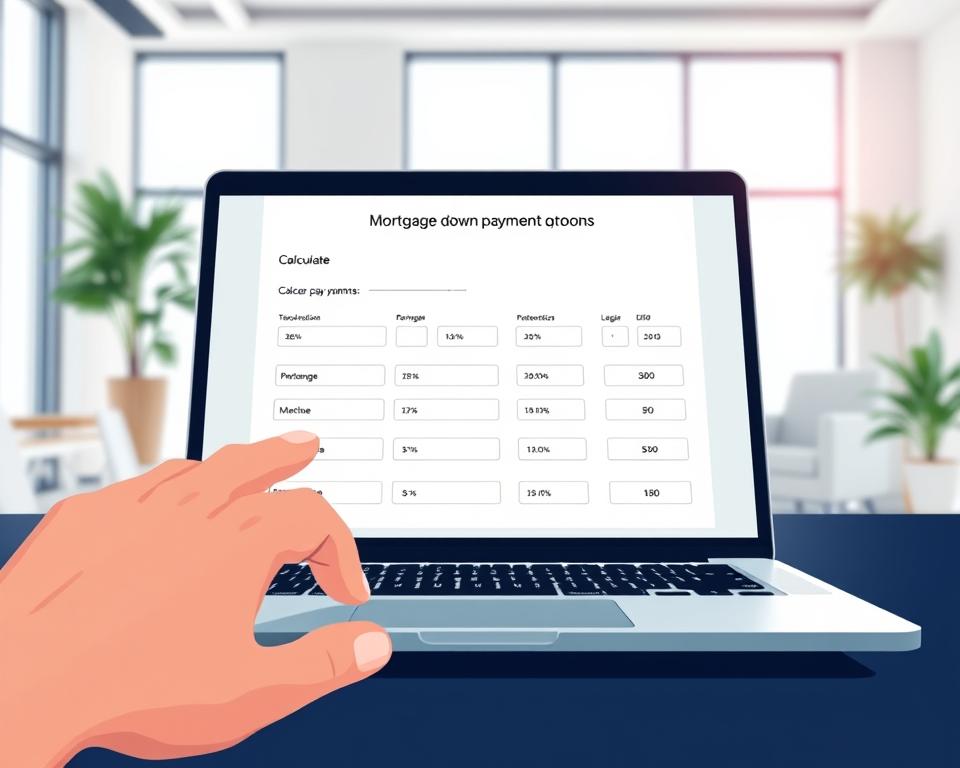
Use a down payment calculator to see how it affects your payments. This tool shows how much you pay now and later.
| Down Payment % | Loan-to-Value Ratio | Impact on PMI |
|---|---|---|
| 3.5% | 96.5% | Required |
| 10% | 90% | Required |
| 20% | 80% | Not Required |
Common Down Payment Myths
Many think you need 20% to get a loan. But, you can often get loans with just 3% or 3.5%. You don’t have to save for years before looking.
Some think all lenders want the same from everyone. But, a down payment calculator or down payment assistance calculator can help. They let you try different scenarios based on your money situation.
The Role of a Mortgage Calculator
Getting a home means knowing your money plans. A down payment calculator helps you see your way. It turns numbers into a clear path for your future.
What is a Mortgage Calculator?
A mortgage calculator is a tool for your home plans. It lets you put in home price, interest, and loan term. Knowing these numbers keeps your money safe during your mortgage.
How it Works for Down Payment Calculations
This tool uses a mortgage down payment calculation formula. It shows how much you’ll pay each month. Changing your down payment changes your monthly payments.
Try different down payments to plan your finances. A good mortgage down payment calculation formula keeps you safe. Being in charge of your money helps you make smart choices.
Types of Down Payments You Can Make
Many people don’t know down payments can vary a lot. The loan you pick affects how much you pay first. Use a mortgage down payment tool to see which is best for you.
Conventional Down Payments
Conventional loans are popular for those with good credit. You might think you need 20% down, but some lenders now accept 3% down. This makes buying a home easier for more people.
FHA and VA Loan Requirements
Government-backed loans are great for those who need easier rules. FHA loans need only 3.5% down, which helps first-time buyers a lot. VA loans, for veterans and military, can be 0% down.
USDA Loans and Their Down Payment Options
USDA loans are for homes in rural or suburban areas. They’re backed by the U.S. Department of Agriculture and often have 0% down. Use a down payment assistance calculator to figure out what you might need.
Knowing your options is key for planning. Whether you go with a conventional or government-backed loan, being fully prepared for closing is important.
Factors Influencing Down Payment Amount
Understanding down payments starts with knowing what affects them. You might want to choose a simple number, but it should be based on facts. A mortgage down payment tool can show you how different choices affect your money in the future.
Home Price and Market Conditions
The home’s price is key, but market conditions also matter. In a competitive seller’s market, a bigger down payment can help your offer stand out. But in a buyer’s market, you might be able to keep more money for other things.
Your local real estate scene affects how much money you need to start with. Look at interest rates and property values together. High home prices often mean you need more money upfront to keep your monthly payments low.
Personal Financial Situation
Your credit score and debt-to-income (DTI) ratio are very important. A higher credit score means you might need less money down. If your DTI is high, you might need more money down to show you’re less risky.
“The best investment you can make is in your own financial literacy before signing a mortgage contract.”
Loan Type and Lender Preferences
Each loan type has its own rules for down payments. Conventional loans might only need 3% down, while government-backed loans have different rules. A mortgage down payment tool can help you see these differences.
Lenders also have their own rules based on their comfort with risk. Some might want more money down for second homes or investments. Always check with your lender to make sure your savings meet their needs.
| Factor | Impact on Down Payment | Risk Level |
|---|---|---|
| High Credit Score | Lower Requirement | Low |
| High DTI Ratio | Higher Requirement | High |
| Competitive Market | Higher for Approval | Moderate |
Your goal is to find a balance that works for both you and the lender. Strategic planning helps make sure buying a home doesn’t hurt your finances.
Step-by-Step Guide to Using a Mortgage Calculator
Using a mortgage calculator can make buying a home easier. It helps you see your financial future before you see any homes. Just put in the right numbers and you’ll know what to expect.
Inputting Home Price and Loan Terms
First, you need to know the home’s price and the loan terms. Choose a loan term like 15 or 30 years.
These numbers are the start of your plan. Being consistent is key. Small changes can make a big difference in your future costs.
Calculating Down Payment Percentage
Next, figure out how much you’ll pay upfront. When you calculate mortgage down payment, see how it changes your loan.
Try different down payments to see how it lowers your interest. Use the mortgage down payment calculation formula. Just multiply the home price by your chosen percentage, like 5%, 10%, or 20%.
“A well-planned down payment is the cornerstone of a healthy mortgage strategy, providing you with immediate equity and lower monthly obligations.”
Understanding Monthly Payment Estimates
After setting your down payment, the calculator shows your monthly payment. This includes principal, interest, taxes, and insurance.
Remember, the calculator adjusts for certain things:
- PMI (Private Mortgage Insurance): This shows if your down payment is under 20%.
- Tax and Insurance Adjustments: Update these to match your area’s rates.
- Scenario Simulation: Change these to find a payment that fits your budget.
By trying different scenarios, you can see how much house you can afford. This way, you stay within your budget and get the home you want.
Maximizing Your Down Payment Strategy
Deciding how much to put down on a home is a big deal. It’s about balancing what you have now and what you want later. An interactive down payment calculator can show you how different amounts change your loan. This helps you find the best way to own a home without losing your financial balance.
Saving for a Larger Down Payment
Putting more money down can save you a lot in the long run. It makes your loan smaller, which means you pay less interest. Plus, a big down payment can get you better interest rates from lenders.
Building up your savings takes discipline and a plan. You might set up automatic transfers to a high-yield savings account. This way, you grow your money without having to think about it every month.
Down Payment Assistance Programs
If saving a lot seems too hard, look into help programs for first-time buyers. Many places offer grants or low-interest loans to help with the down payment. For example, New American Funding works with programs in 14 states to help buyers.
These programs can really help if you have steady income but not much cash. Just make sure you qualify for them. Using these resources lets you buy a home sooner and keep your emergency fund safe.
When to Consider a Smaller Down Payment
Choosing a smaller down payment might be the best choice for you. It might mean higher monthly payments or needing private mortgage insurance (PMI). But, it lets you keep cash for other important things like repairs or moving costs.
Think about these points when picking a smaller down payment:
- Increased Monthly Costs: Smaller down payments mean higher monthly insurance costs.
- Equity Growth: You’ll build equity slower than with a bigger down payment.
- Financial Flexibility: Keeping more cash helps with unexpected expenses.
The best choice depends on your financial situation. Weighing these points helps you make a choice that fits your life and future goals.
Common Mistakes to Avoid with Down Payments
Many people focus too much on the down payment. They forget about other important financial things. It’s key to plan your whole budget, not just the down payment.
Overestimating Your Financial Capability
House hunting can make you excited and want to spend more than you can. Use a home loan down payment estimator to see how much you can afford. Never assume your savings are enough without checking your emergency fund and other debts.
Ignoring Additional Costs of Homeownership
Some buyers only think about the down payment. They forget about ongoing costs like maintenance and property taxes. Remember, HOA dues are separate from your mortgage payment. Not planning for these hidden expenses can hurt your budget.
“The true cost of homeownership extends far beyond the mortgage payment; it includes the ongoing responsibility of maintaining your asset and meeting all community obligations.”
Neglecting to Shop Around for Loan Options
Don’t accept the first loan offer without comparing. Use an interactive down payment calculator to see how different loans affect your costs. Shopping around helps you find the best loan for your down payment and interest rate.
| Mistake Type | Potential Impact | Recommended Action |
|---|---|---|
| Budget Overextension | High monthly stress | Use a calculator |
| Ignoring HOA Fees | Unexpected debt | Review all disclosures |
| Single Lender Bias | Higher interest rates | Compare three quotes |
Timing Your Down Payment: When is the Best Time?
Getting ready to buy a home is more than just saving money. You need to watch the market and your money closely. A home loan down payment estimator helps you see how timing affects your mortgage. Waiting for the right time can save you a lot of money in the long run.
Market Analysis for Optimal Timing
Knowing the real estate market is key before you spend your money. Rates and how many homes are for sale change a lot. Strategic patience helps you buy when it’s best for you, not the seller.
- Watch local interest rates to guess your future payments.
- Look at how many homes are for sale to find the best time to buy.
- Talk to local experts to see if the market is cooling or heating up.
Building Your Credit Score Ahead of Time
Your credit score is very important for getting good loan terms. A better score means lower interest rates, saving you money over time. Before you buy, use a home loan down payment estimator to see how a better score can help.
Working on your credit early is a smart move. Pay off high-interest debt and make all payments on time. This gets your finances ready for the best loan deals when the market is right.
The Impact of Down Payments on Your Mortgage Rates
Your down payment is key to making your home loan affordable. By calculating down payment for mortgage early, you understand its impact. A big down payment shows lenders you’re stable.

How Higher Down Payments Affect Interest Rates
Lenders see a big down payment as a risk cut. When you put down more, you start with equity. This makes the loan safer for the bank.
This safety can mean better interest rates. A lower rate means smaller monthly payments. Small rate changes can save thousands over thirty years.
Using a mortgage calculator shows these savings. It helps you see how different down payments affect your payments.
“The most important investment you can make is in your own financial literacy, especially when navigating the complexities of home financing.”
The Relationship Between Down Payments and Loan Approval
Your down payment is crucial for loan approval. Lenders like to see a big down payment. It shows you can save and manage money well.
Building equity from day one helps you and the lender. A big down payment makes the approval process easier. Your down payment plan should match your long-term goals for easy homeownership.
Resources for Further Assistance
Getting ready to buy a home needs good info and expert help. You can find what you need with special online tools and professional groups. They make figuring out your down payment easier.
Digital Platforms and Calculators
Websites like Zillow and Bankrate have great tools for planning your finances. You can change numbers quickly to see how different scenarios work for you. This helps a lot when you’re figuring out your down payment.
Expert Mortgage Advice
Talking to a loan officer at places like Wells Fargo or Rocket Mortgage is a good idea. They look at your credit and income to make sure your down payment plan is doable. They want to help you succeed.
Educational Community Programs
Local groups and non-profits have seminars for first-time buyers. These events let you meet experts who talk about local help. Learning from these groups helps you make smart choices for your home purchase.