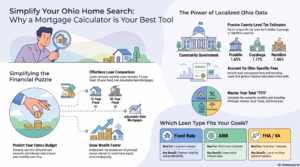

Buying a home needs careful planning. Before you talk to a lender, use a mortgage affordability calculator. It shows what you can afford.
These tools make complex money matters simple. They help you follow the 28/36 rule. This means your home costs should be less than 28% of your monthly income. And your total debt should be under 36%.
Creating a good budget is key. These home buying calculators help you make smart choices. They make you feel ready and confident when you look for a loan.
Key Takeaways
- Use digital tools to check if you’re ready financially before talking to lenders.
- Follow the 28/36 rule to keep your home costs and debt in balance.
- Find out how much you can spend to avoid spending too much.
- Understand how interest rates affect your monthly payments.
- Make buying a home easier with accurate information.
Understanding Mortgage Calculators
Starting your journey to owning a home means knowing your budget. Many people get lost in the loan math. But, Mortgage Calculators make it easy to see what you’ll pay each month.
What is a Mortgage Calculator?
A mortgage calculator helps figure out your monthly home costs. Just enter the home price, down payment, and interest rates. Then, you’ll know what you might pay each month.
These tools turn complex numbers into easy-to-understand monthly costs. You can try different scenarios. For example, change your down payment or loan term. This shows how small changes affect your future.
The Importance of Using a Calculator
Using a mortgage affordability calculator is key to setting a budget before looking for homes. It stops you from falling in love with a home that’s too expensive. Planning ahead lets you make smart choices when buying.
The table below shows how different calculators help you plan:
| Calculator Type | Primary Function | Best For |
|---|---|---|
| Payment Estimator | Calculates monthly P&I | Budgeting monthly cash flow |
| Affordability Tool | Determines max loan amount | Setting a home search price |
| Amortization Tool | Shows interest vs. principal | Long-term debt planning |
These tools are like filters for your home search. They help you find homes that match your income and savings. Calculating your numbers now will save you stress later.
Types of Mortgage Calculators
There are many loan types, each needing its own way to figure out costs. Picking the right home loan calculator is key to understanding your path to owning a home. The right tool helps you see how your interest rate and loan term affect your monthly payments.
Fixed-Rate Mortgage Calculators
A fixed-rate loan means your interest rate stays the same for the whole loan. Using a mortgage rate calculator for this type is simple. Your payments stay the same, making it easier to budget for the long term.
Adjustable-Rate Mortgage Calculators
Adjustable-rate mortgages, or ARMs, have rates that change with the market after a start period. These calculators are more complex. They must figure out how rate changes might affect your future payments. It’s important to use a specialized tool for this.
FHA Loan Calculators
FHA loans have special rules, like lower down payments and mortgage insurance. A mortgage down payment calculator shows how different down payments change your loan amount. Using a precise home loan calculator helps you understand your financial commitment before you sign anything.
Whether you’re looking at a fixed-rate or FHA loan, a reliable mortgage rate calculator is crucial. Remember, a mortgage down payment calculator is great for trying out different scenarios. Taking time to compare options helps you make the best choice for your future.
How to Use a Mortgage Calculator
Using a digital calculator makes buying a home easier. It turns hard numbers into a clear plan. With a mortgage payment calculator, you get insights to help you decide.

Inputting Your Loan Details
Start by putting in the home price and your mortgage down payment calculator info. This tells you how much you’ll need to borrow.
Next, add your interest rate and loan term. These numbers help the calculator work out your monthly payments. It uses a special formula to make sure your payments are right.
Understanding the Results
After you enter your info, the calculator shows you your monthly payments. You’ll see how much goes to the principal and interest. This helps you plan for the future.
Try changing the loan term or interest rate to see how it affects your budget. Using a mortgage affordability calculator this way helps you feel sure and clear about your choices.
Key Terms You Need to Know
Learning about mortgage terms makes buying a home easier. Knowing these words helps you talk to financial experts. It also helps you make smart choices about your home.
Principal, Interest, Taxes, and Insurance
Most monthly mortgage payments are called PITI. This helps manage your long-term loan well.
The Principal is the money you borrowed for the home. The Interest is what you pay for using that money. Taxes are local property taxes. And Insurance protects your home from damage.
Loan-to-Value Ratio (LTV)
The Loan-to-Value ratio, or LTV, shows a lender’s risk. It’s the loan amount divided by the home’s value.
A lower LTV means you own more of the home. If you put down less than 20%, you’ll need Private Mortgage Insurance (PMI). This costs 0.46% to 1.50% of your loan each year until you have enough equity.
| Component | Description | Impact on Payment |
|---|---|---|
| Principal | Loan balance repayment | Builds home equity |
| Interest | Cost of borrowing | Determined by rate |
| Taxes | Local government levy | Varies by location |
| Insurance | Property protection | Required by lenders |
Benefits of Using Mortgage Calculators
Using digital tools can make your mortgage journey clear. These Mortgage Calculators give you the insights you need. They help you understand real estate financing better.
Financial Clarity
Understanding your finances is key to a successful purchase. By using your specific data, you can see what you can afford. This helps you choose what fits your actual lifestyle.
These Mortgage Calculators show how interest rates and loan terms affect your payments. This helps you avoid spending too much. You can then focus on homes that meet your long-term goals.
Budget Planning
Good budget planning balances housing costs with other financial needs. These tools let you see how a mortgage fits with your retirement and savings plans.
Using these tools makes buying a home less stressful. You can adjust your inputs to create a plan that keeps your finances healthy. This way, you can still get your dream home.
| Financial Factor | Impact on Budget | Calculator Benefit |
|---|---|---|
| Monthly Payment | High | Provides exact estimates |
| Interest Rates | Medium | Shows long-term savings |
| Down Payment | High | Reduces principal balance |
| Property Taxes | Low | Ensures total cost awareness |
Using Mortgage Calculators keeps you in control of your finances. By planning ahead, you can save for the future. You can also enjoy the benefits of homeownership today.
Common Mistakes to Avoid
Many people make a big mistake when they only look at the monthly mortgage payment. The principal and interest are big parts of your bill. But, they are not the only things that affect your true monthly obligation.
Not counting all the costs of owning a home can cause a lot of stress later on.

Overlooking Additional Costs
Lenders want you to pay for more than just the loan. You need to think about property taxes, homeowners insurance, and HOA fees. These costs are often hidden in your monthly payment through an escrow account.
Not remembering these costs can make you think you can afford more than you can. If you only plan for the mortgage, you might not have enough for everything. Make sure to include these costs in your budget to keep your finances healthy.
“The cost of a thing is the amount of what I will call life which is required to be exchanged for it, immediately or in the long run.”
Misestimating Loan Duration
Another mistake is thinking the wrong loan length is okay. A longer loan might mean smaller monthly payments. But, you’ll pay way more interest over time.
Choosing the wrong loan length can slow down how fast you build equity. It’s important to try out different loan lengths to see how they affect your money. The table below shows how different choices can change your financial future.
| Cost Factor | Impact on Monthly Budget | Long-term Financial Effect |
|---|---|---|
| Property Taxes | High | Increases over time |
| Homeowners Insurance | Moderate | Protects your equity |
| HOA Fees | Variable | Can rise annually |
| Loan Duration | High | Determines total interest paid |
Finding the Right Mortgage Calculator
Finding the right tool is key when buying a home. There are many options, so pick one that’s accurate and flexible. A good mortgage payment calculator helps you plan your finances well.
Online Tools and Resources
Look for Mortgage Calculators that you can customize. Tools like Bankrate give more than just interest rates. They also estimate property taxes, insurance, and HOA fees.
Being able to change these fields is very important. It lets you see what your monthly payments might be. This helps you avoid surprises later.
Mobile Apps
If you like managing money on your phone, many apps are available. These apps work like web tools but are portable. You can try different scenarios anywhere, anytime.
Consistency is key when using these tools. Make sure the math adds up, no matter the device. Using these tools helps you make smart, informed choices when buying a home.
Comparing Different Mortgage Options
Choosing the right mortgage is key to your financial future. Look at different loans to find the best one for you. A mortgage rate calculator helps see how each option affects your monthly payments.
Fixed vs. Adjustable Rates
Fixed-rate loans have the same interest rate for the loan’s life. This gives you stability and peace of mind. Adjustable-rate mortgages (ARMs) start with a lower rate but can change with the market.
Experts say to “date the rate and marry the house.” This means finding a good property at a price you can afford today is key.
If you plan to stay in your home long, a fixed rate is safer. But, if you might move or refinance soon, an ARM could save you money upfront. Always check the total interest with a mortgage rate calculator.
Length of Loan Terms
The loan term affects your monthly payment and total interest. A 30-year term is common, but a 15-year term can save you money.
- 15-Year Term: Higher monthly payments but less total interest.
- 30-Year Term: Lower monthly payments, giving you more budget flexibility.
Here’s a comparison of these options:
| Loan Feature | Fixed-Rate | Adjustable-Rate |
|---|---|---|
| Payment Stability | High | Low |
| Initial Interest | Standard | Often Lower |
| Long-term Risk | Minimal | Market Dependent |
Your choice should match your risk comfort and financial plan. Whether you pick a shorter term or a fixed rate, make sure it’s good for your finances. A mortgage rate calculator helps confirm your choice is right for you.
Preparing for Homeownership
Your journey to buy a house starts long before you see a house. First, check your money situation. This makes sure you’re ready for a mortgage. It helps you avoid problems and succeed in the long run.
Understanding Your Financial Health
To know if you’re ready to buy, look at your income and debt. A good house affordability calculator shows how much you can spend each month. Lenders use the 28/36 rule to see if you qualify.
This rule means your housing costs should be no more than 28 percent of your income. Also, your total debt payments should not go over 36 percent of your income. This helps you keep a good budget while looking for your dream home.
- Check your credit report for mistakes.
- Pay off debts with high interest.
- Save for a down payment and closing costs.
- Use a home loan calculator to try different rates.
Pre-Approval vs. Pre-Qualification
Many people mix up pre-qualification and pre-approval. But they mean different things. Pre-qualification is a quick guess of what you might borrow, based on what you say. It’s a good start, but it’s not strong with sellers.
Pre-approval is a real promise from a lender after they check your money. It makes you stand out in a busy market. Sellers prefer buyers who have already gotten financing.
Before you look for houses, use a house affordability calculator to check your budget. Then, talk to a lender to start the pre-approval. A home loan calculator helps you see how different loans affect your payments.
Next Steps After Calculating
Now you know how much you can afford. It’s time to talk to experts who can help you get a loan. Using a house affordability calculator is a big step towards finding your dream home.
Contacting a Mortgage Lender
When you find a price range you like, start the pre-approval process online. This shows sellers you’re serious and have financing ready. After you apply, a Home Lending Advisor will contact you to talk about your needs.
Your advisor will check your finances to make sure you can afford it. They’ll explain interest rates and loan options that fit your goals. This advice helps you feel sure about your mortgage choices.
Setting a Realistic House Budget
Creating a budget is more than just the home price. You need to think about property taxes, insurance, and maintenance costs. A good house affordability calculator shows how these costs affect your monthly budget.
It’s smart to have extra money for surprises or changes in your life. Taking care of your finances means you can enjoy your new home without worry. Here’s a table to show how different costs add up each month.
| Expense Category | Impact on Budget | Frequency |
|---|---|---|
| Principal & Interest | High | Monthly |
| Property Taxes | Medium | Monthly/Annual |
| Homeowners Insurance | Low | Monthly/Annual |
| Maintenance Reserve | Variable | As Needed |
Conclusion: Taking Action on Your Home Buying Journey
Mastering your financial future starts with the right tools. Using home buying calculators helps you understand the market. These tools help you make a budget and plan for the future.
These calculators give you a starting point. But, you also need advice from lenders. This ensures your plans fit the current market. Being proactive helps you save money early on.
Think about using a refinance home loan calculator to see future savings. Using these calculators keeps you ready for every step. With good planning, your path to owning a home is clear.
Make sure to check your credit and savings often. This turns complex math into a simple plan. Start your journey now, knowing you have the tools to succeed.