1. The Mystery of the Monthly Payment
For many prospective buyers, house hunting begins with excitement and ends in a fog of mathematical anxiety. The purchase price of a home is often treated as the final word on affordability, yet the reality of home financing often feels like a “black box” of hidden variables. In this environment, a mortgage calculator is far more than a simple digital tool; it serves as a financial crystal ball. By distilling complex formulas into clear projections, it allows you to look past the sticker price and understand the long-term implications of your debt. To navigate the market successfully, you must understand the mechanics behind the numbers.

2. Location is a Line Item: Why Zip Codes Change Your Monthly Budget
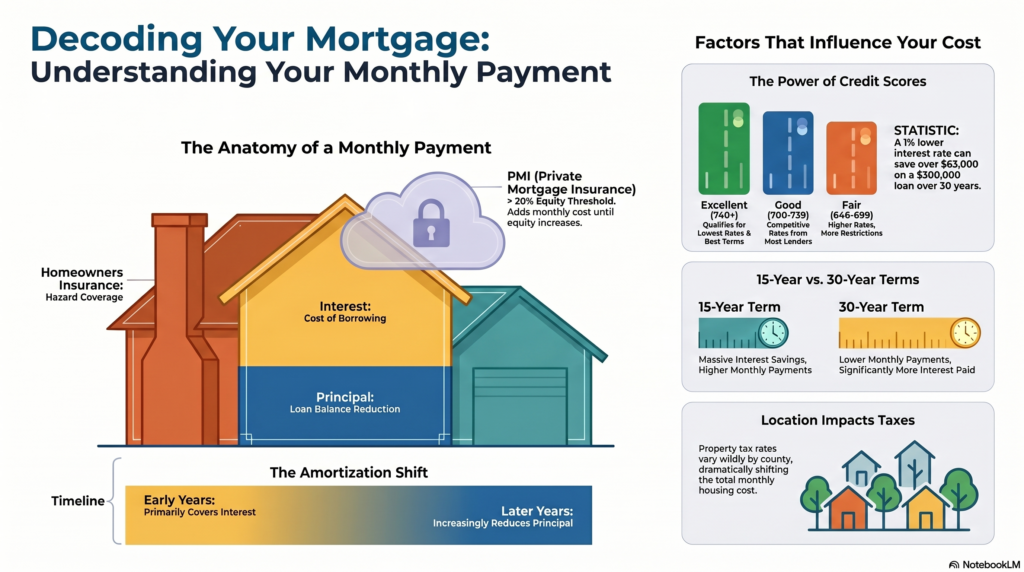
Affordability is often dictated by factors unrelated to the house’s architecture. Property taxes and homeowners’ insurance are location-dependent factors that can significantly affect your monthly budget. Taxes fund local infrastructure like schools and roads, and these rates vary dramatically by geography, typically ranging from 0.5% to 2.5% of the home’s value annually.
Consider the strategic impact of geography:
A $300,000 home in Texas might incur $6,000 in annual property taxes, whereas a home of the same price in Hawaii might incur only $900. That 5,100 annual gap creates a 425 difference in your monthly obligation. When you add varying insurance premiums—which spike in areas prone to natural disasters—your “dream home” in one zip code could be a financial nightmare in another.
Warning: Payment Shock.
Many buyers focus exclusively on principal and interest, only to face “payment shock” when they see the final total. A comprehensive budget must include all escrow items—taxes, insurance, and potentially Homeowners Association (HOA) fees—to reflect the true cost of ownership.

3. The $100 Magic Trick: How Small Extras Erase Years of Debt
One of the most powerful revelations of an amortization schedule is how heavily interest is weighted in the early years of a loan. Because interest is calculated based on your remaining balance, the lender takes their cut first. In the first decade, your payments do very little to reduce the actual principal. However, making small, consistent extra payments to the principal “hacks” this system. By reducing the balance early, you “kill” the interest before it has a chance to compound over the remaining decades.
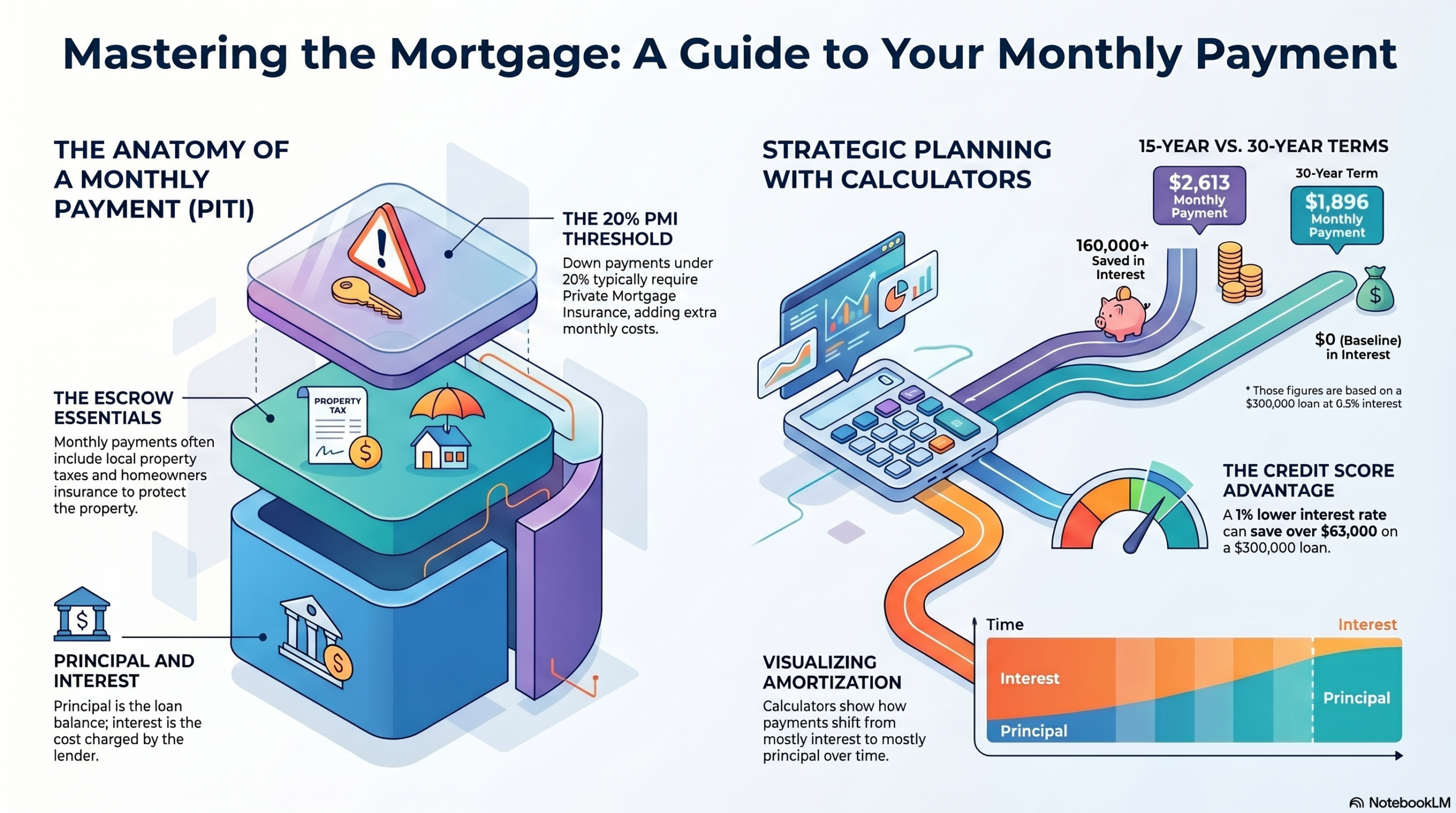
The math is striking: on a $300,000 loan at a 6.5% interest rate, adding just $100 to your monthly payments saves over $52,000 in total interest costs. More importantly, it shaves 5 years and 7 months off the loan term. This strategy marks a psychological shift for the borrower, moving from a position of perpetual debt to one of accelerated homeownership and wealth building.
4. PMI is Not a Life Sentence: The 20% Equity Escape Hatch
Private Mortgage Insurance (PMI) is a common hurdle for buyers who cannot provide a 20% down payment, typically costing between 0.5% and 1% of the loan amount annually. While PMI protects the lender, it is a temporary cost, not a permanent feature of the loan.
The “escape hatch” is equity. As a strategist, you should know the two specific triggers for removal:
- The Request: Once your scheduled principal reaches 80% of the loan-to-value ratio (20% equity), you can proactively request that the lender cancel the PMI.
- The Automatic Cancellation: Per federal law, the lender must automatically cancel PMI once you reach 78% loan-to-value (22% equity).
Quick Tip: Strategies for PMI
- Piggyback Loans: Use a secondary loan to reach the 20% threshold.
- VA Loans: Qualified veterans can avoid PMI entirely regardless of the down payment.
- Appreciation: If your home’s value rises, a new appraisal could prove you have 20% equity years ahead of schedule.
5. The 15 vs. 30 Year Trade-Off: Solving the Cash Flow vs. Wealth Equation
Choosing between a 15-year and a 30-year mortgage is a fundamental decision between monthly flexibility and aggressive wealth acceleration. On a $300,000 loan at 6.5%, the trade-offs are stark:
30-Year Mortgage
- Pros: Lower monthly payments ($1,896); greater “cash flow” flexibility for other investments or emergencies.
- Cons: You will pay significantly more in total interest; equity builds at a glacial pace in the first decade.
15-Year Mortgage
- Pros: Massive interest savings of approximately $160,000; you own the asset outright in half the time.
- Cons: The monthly payment is roughly 717 higher (2,613 total), leaving less “wiggle room” in your monthly budget.
Click here to learn more about Mastering the Mortgage Engine.
6. The “Hidden” Discount: Why 100 Points on a Credit Score is Worth $60,000
Interest rates are not universal; they are deeply personal. A 100-point difference in your credit score can swing your interest rate by a full percentage point. On a $300,000 loan, a 1% lower interest rate saves approximately $175 every month.
From a strategic perspective, the “ROI of waiting” is often overlooked.
If taking six months to repair your credit and jump from a “fair” to an “excellent” score secures that 1% discount, you save $63,000 over the life of the loan. In most market conditions, the financial gain from that rate reduction far outweighs the potential home price appreciation you might miss by waiting half a year to buy.
“Seemingly small rate differences translate to significant monthly savings… a 1% lower interest rate saves approximately $63,000 over 30 years.”
7. Conclusion: From Estimation to Action
While mortgage calculators are indispensable tools for strategic planning, they are not a replacement for professional lender pre-approval. To ensure your budget is grounded in reality, always apply the 28/36 rule: your total housing payment (PITI) should not exceed 28% of your gross monthly income, and your total debt obligations should stay under 36%.
As you transition from the calculator to the real estate market, ask yourself one final question: “Are you buying a house you can afford, or are you buying a mortgage you can manage?” By focusing on the total cost of the loan and the strategic use of equity, you ensure your home remains a foundation for long-term wealth rather than a source of financial stress.